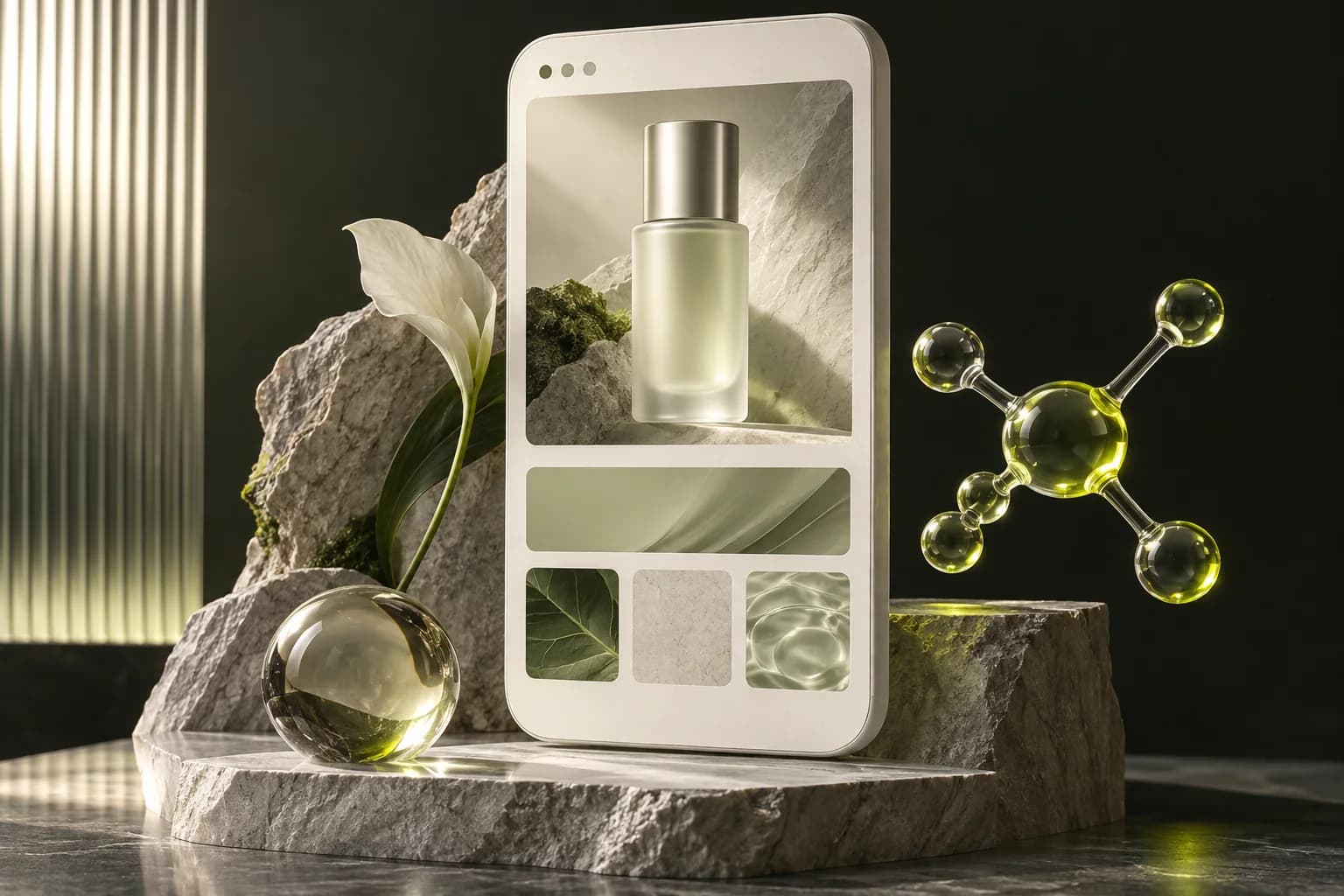
Good GHK-Cu ads begin with a recognizable product, not a molecule floating beside a promise. For a topical copper-peptide skincare brand, buyers need to understand the format, ingredients, texture, size and place in their routine. A clear campaign brief turns those details into useful creative and a product page that finishes the same conversation.
This guide concerns finished topical cosmetic products whose claims and intended market have been reviewed. It does not cover injectable GHK-Cu or research reagents. FDA identifies safety concerns specifically for compounded injectable GHK-Cu; that statement should not be presented as a blanket assessment of every finished topical cosmetic. Separately, therapeutic or structure-and-function claims can make a product a drug under US rules. FDA’s product-classification explanation.
In this guide
1. Write the product truth sheet
Before selecting an angle, collect the facts a designer and copywriter can safely use. Include the exact product name, cosmetic format, ingredient list, pack size, application instructions, price and supported statements. Use the actual label and current product specifications. Do not derive the finished product’s performance from a study of an isolated ingredient or a different formulation.
Add a separate evidence column for any performance statement. Ask what was tested, on which formulation and under what conditions. If the evidence does not support the proposed wording, change the wording. Avoid claims of treating disease, regenerating tissue or producing guaranteed results. The visual should remain within the same boundaries as the text.
2. Organize keywords around shopping questions
Someone searching for a copper peptide serum may already recognize the category. Someone searching what is GHK-Cu may want an explanation. Give each intent an appropriate destination. The keyword research workflow helps separate product searches from questions about the advertising business itself.
| Illustrative query group | Buyer question | Destination to consider |
|---|---|---|
| Copper peptide serum | Which product fits what I want? | A relevant product or small comparison collection. |
| GHK-Cu skincare ingredients | What does this formula contain? | An ingredient explanation linked to the accurate label. |
| Copper peptide serum texture | What will the product feel like? | A product page with a truthful texture demonstration. |
| Brand + copper peptide serum | Where is the item I already know? | The exact product and variant page. |
Use the market’s natural terminology, not a forced technical phrase in every sentence. Where paid search is eligible, review unrelated query families and consider appropriate exclusions. Do not attract injectable or treatment enquiries with a cosmetic offer. A click that creates the wrong expectation wastes both the visitor’s time and your budget.
3. Give each creative one job
Create distinct explanations of the product before producing multiple color variants. A useful first set could show the packaging and size, demonstrate the actual texture, and explain a simple ingredient fact. Keep the product recognizable across concepts so the team can compare the message rather than three unrelated identities.
- Product portrait: accurate bottle, label and size, with one clear headline.
- Texture demonstration: real application footage, honest lighting and no simulated skin transformation.
- Ingredient explanation: one supported fact with plain-language context.
- Routine context: product handling consistent with the manufacturer’s instructions, without medical advice.
Avoid imagery that gives a cosmetic an injectable or clinical-treatment identity. White coats, syringes, dramatic before-and-after images and implied medical endorsements can change the message consumers receive. A beautiful asset is useful only when it communicates the product truthfully. The creative testing guide offers a broader process for managing those briefs.
4. Match the page to the exact offer
Open the destination on a phone. The same product, variant and size should be easy to identify immediately. Show the ingredient information, current price, availability, delivery terms and support route. If the creative demonstrates texture, make that demonstration available on the page rather than replacing it with a wall of technical copy.
For a product considered for Google Shopping, the Merchant Center feed and landing page need to agree on the offer. Shopping matching uses product data rather than a keyword list. An accurate title such as brand, product type and size is more useful than a string of exaggerated benefits. Product eligibility remains a separate decision. Google’s explanation of Shopping ads.
5. Run a test that answers one question
An illustrative first test might compare a product portrait with a texture demonstration while keeping the offer, market and destination consistent. The hypothesis is that one explanation helps suitable shoppers understand the product more quickly. Set the comparison window and the decision criteria before looking at the results; do not declare a winner from a few inexpensive clicks.
Read completed orders alongside landing-page visits, purchase delay, returns and recurring support questions. Keep platform-attributed orders separate from total store orders. If a concept gets attention but attracts the wrong enquiries, revise the message. A lower click cost is not automatically a better commercial result.
6. Turn the result into the next brief
Write a short decision record: concept, hypothesis, observation, uncertainty and next action. If buyers repeatedly ask about bottle size, the next brief should clarify size. If the winning concept only ran during a discount, retest before attributing the result entirely to the image. This creates a useful learning history instead of a folder of unexplained winners.
Adnoxx can support the campaign and creative workflow around an eligible offer. Bring a clear product brief, reviewed wording and an honest destination. Account access or polished production cannot substitute for those foundations, but a disciplined process makes each new creative easier to evaluate.
Sources and editorial scope
Reviewed 31 October 2026. Primary references: FDA on cosmetic and drug classification, FDA on compounding substances with potential safety risks, Google Shopping ads, and Merchant Center healthcare policy. Creative and test examples are original editorial suggestions, not efficacy claims or measured customer results.